What Causes Bleeding Gums?
Seeing a few drops of blood when brushing your teeth can be alarming. If it happens every time you brush, the question naturally arises: “Is there a serious problem with my gums?”
In most cases, it is not a reason to panic. However, brushing it off by assuming “my gums are just sensitive” is equally ill-advised.
Healthy gums do not bleed consistently during daily brushing. Bleeding is almost always the earliest visible indicator of active tissue inflammation. Hallmarks of early gingival inflammation include localized erythema (redness), edema (swelling), and bleeding upon gentle contact.
What Is Gingivitis?
Gingivitis is an early, reversible stage of gum inflammation. Redness, swelling, and bleeding are its most common symptoms.
Importantly, tartar (calculus) is not the sole factor.
Habitual mouth breathing during sleep, specific blood pressure medications, gastroesophageal reflux, or chronic psychological stress can disrupt your oral balance far more than you might realize.
Gingivitis can be fully arrested and reversed when managed early. The American Academy of Periodontology classifies gingivitis as the initial stage of periodontal disease.
The Primary Cause of Bleeding Gums
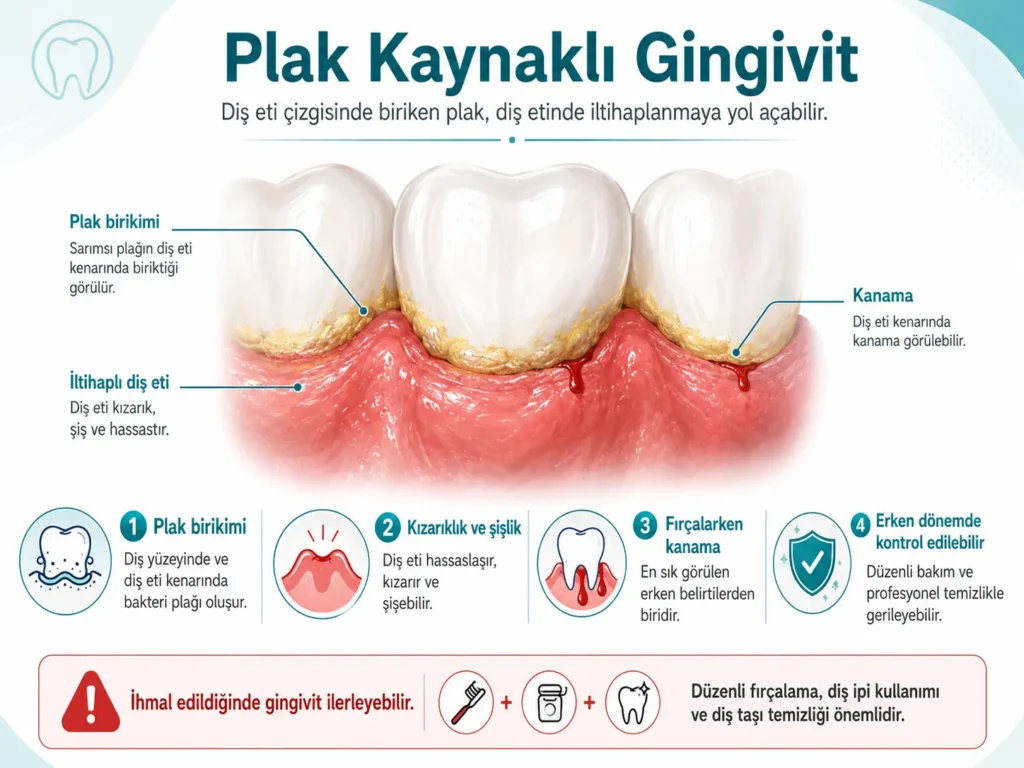
The most frequent culprit is plaque-induced gingivitis—the initial phase of gum inflammation.
Bacterial biofilm (plaque) continually accumulates along the gingival margin where teeth meet the gums. The immune system mounts an inflammatory response against these bacterial colonies.
Capillaries within the gingival connective tissue dilate and proliferate, leaving the tissue swollen, engorged, and fragile. Consequently, even the light pressure of a soft toothbrush can trigger bleeding.
When you notice blood, the primary question should not be:
“Is my toothbrush too stiff?”
Rather, consider:
“What is driving active inflammation in this specific tissue?”
Gingivitis is entirely reversible with professional treatment and proper oral hygiene protocols. If left unmanaged, it can progress into periodontitis, permanently compromising the bone and connective tissues supporting your teeth.
What Is Periodontitis?
Periodontitis is an advanced, destructive stage of periodontal disease that progresses beyond the superficial gum tissue to cause irreversible loss of the surrounding alveolar bone and periodontal ligament.
Is Bleeding Normal When Brushing?
No. Frequent, recurrent bleeding should never be considered normal.
When someone begins flossing regularly or cleaning neglected interdental spaces for the first time, inflamed contact zones may bleed during the initial few days. A common misstep is stopping all interdental cleaning at the first sign of blood.
Halting cleaning leaves the bacterial biofilm intact, sustaining the inflammatory cycle.
If bleeding persists, or is accompanied by swelling or halitosis (bad breath), a clinical dental evaluation is indicated. Bleeding, painful, or swollen gums are clinical signs that warrant professional attention.
Why Do Gums Bleed Specifically in the Morning?
Some patients report a distinct pattern:
“My gums do not bleed during the day, but every morning when I brush, there is blood.”
When encountering this complaint, evaluating plaque levels alone is insufficient. Clinicians also check for underlying airway and sleep factors:
- Do you suffer from chronic nasal congestion?
- Do you snore?
- Do you wake up with a parched, dry mouth?
- Is there saliva pooling on your pillow?
- Do you experience a scratchy throat upon waking?
- Nocturnal mouth breathing is an overlooked contributor to gingival inflammation.
Under physiological conditions, saliva continuously lubricates oral tissues, provides mechanical clearance, and delivers antimicrobial defenses.
Breathing through an open mouth for hours accelerates intraoral moisture loss. Gingival tissues—particularly around the upper anterior teeth—are subjected to a continuous stream of dry air.
Clinical studies demonstrate an association between chronic mouth breathing and increased gingival inflammation and bleeding indices. While mouth breathing alone does not guarantee periodontal disease in every individual, it significantly lowers local tissue defense thresholds.
Why Does Dry Mouth Leave Gums Vulnerable?
Saliva is far more than simple hydration. It buffers intraoral pH, remineralizes enamel, hydrates mucosal tissues, and maintains a balanced microbial ecosystem.
When salivary flow diminishes (xerostomia), this protective environment breaks down. Dry mouth is well-documented to correlate with a higher incidence and severity of periodontal complications.
Clinically, this often manifests as localized bleeding along the labial margins of the maxillary front teeth.
Simply using an astringent mouthwash without resolving underlying nasal obstruction will not address the root cause. A consultation with an Ear, Nose, and Throat (ENT) specialist may be warranted if chronic nasal congestion, heavy snoring, or obstructive sleep apnea is suspected.
If you sleep with your mouth open, morning gum bleeding should not be attributed solely to your toothbrush.
Can Blood Pressure Medications Cause Bleeding Gums?
It is important to distinguish which medications affect oral tissues:
Not all antihypertensive medications cause gingival changes.
However, certain calcium channel blockers used in hypertension management—most notably nifedipine, and less frequently amlodipine—can induce drug-influenced gingival enlargement in susceptible individuals.
The condition often begins subtly. Gums do not swell overnight; early changes usually manifest as a thickened, bulbous appearance of the interdental papillae.
As tissue expands, it forms pseudopockets that harbor bacterial plaque. Plaque control becomes challenging, and inflammation escalates.
Patients frequently report:
“I brush diligently, but my gums remain swollen and bleed constantly.”
Research indicates that the severity of drug-influenced gingival overgrowth is influenced by baseline periodontal status, oral hygiene quality, and individual genetic susceptibility.
Should You Stop Taking Your Blood Pressure Medication?
No. Never discontinue or alter prescription cardiovascular medications without consulting your prescribing physician.
The clinical protocol involves:
Conducting a comprehensive periodontal examination to evaluate pocket depths.
Performing thorough professional debridement to establish strict plaque control.
If necessary, liaising with your physician to explore alternative medication classes.
In many instances, rigorous periodontal therapy and consistent maintenance yield marked improvements in gingival overgrowth without requiring medication changes.
Does Acid Reflux Cause Bleeding Gums?
Gastroesophageal reflux disease (GERD) is not a direct, standalone cause of gingival bleeding. However, reflux alters the oral biome.
When gastric acid reaches the oral cavity, it drops the local pH. While the most recognized dental manifestation of GERD is dental erosion, recent microbiome studies demonstrate that chronic reflux can also alter salivary microbial composition.
Periodontal wellness is not merely defined by the presence of bacteria, but by the dynamic equilibrium between diverse oral microorganisms and host immune defenses (oral microbiome homeostasis).
When reflux combines with dry mouth, plaque buildup, and inadequate interdental cleaning, managing gingival inflammation becomes more complex.
Rather than viewing reflux as a direct cause, clinicians evaluate whether gastric acidity is acting as an environmental cofactor that destabilizes an already vulnerable oral ecosystem.
Can Stress Cause Bleeding Gums?
Yes, psychological stress can influence periodontal tissues.
Numerous studies demonstrate a correlation between chronic psychological stress and periodontal breakdown. Systematic reviews document significant links between elevated salivary and serum cortisol levels and worsening periodontal indices.
Cortisol plays a central regulatory role in the human stress response. Prolonged high stress can dysregulate systemic immune and inflammatory pathways, blunting the body’s natural defense against periodontopathic bacteria.
Beyond endocrinology, severe stress frequently alters daily habits:
- Irregular, high-sugar dietary patterns
- Nocturnal bruxism (clenching and grinding)
- Disturbed sleep architecture
- Increased tobacco or alcohol consumption
- Rushed, ineffective toothbrushing
- Abandonment of daily interdental flossing
When these behavioral factors align, they create ideal conditions for biofilm proliferation and gingival inflammation.
Does Teeth Clenching Directly Cause Bleeding Gums?
Bruxism (clenching or grinding) is not a direct, standalone cause of gingival bleeding. It primarily presents as incisal wear facets, dentin hypersensitivity, micro-fractures, masticatory muscle fatigue, and temporomandibular joint (TMJ) discomfort.
However, heavy occlusal trauma can act as a complicating cofactor in an oral environment with pre-existing periodontal disease.
Consider a patient in their 30s experiencing heavy morning bleeding who brushes three times a day. While their routine appears diligent on paper, clinical examination may reveal marginal plaque retention, toothbrush abrasion, clear wear facets from clenching, and acute occupational stress.
In complex presentations, attributing symptoms to a single factor is counterproductive. Over-brushing is not the same as effective brushing. Successful therapy often focuses on refining technique rather than simply increasing brushing frequency.
Why Do Gums Bleed So Easily When Tartar Is Present?
Dental calculus (tartar) provides a rough, porous, mineralized surface that accelerates the adherence of fresh pathogenic biofilm.
It forms most abundantly along the lingual surfaces of the lower front teeth and the buccal aspects of the upper molars.
Once calculus calcifies, it cannot be removed with a manual or electric toothbrush; it requires ultrasonic and hand instrumentation during a professional dental cleaning.
A common misconception is:
“I had my teeth cleaned, so my gums should remain healthy indefinitely.”
Professional scaling removes the calcified foundation, but ongoing tissue health depends on consistent daily home plaque control. If interdental biofilm is left undisturbed, inflammation will recur.
What Is the Difference Between Gingivitis and Periodontitis?
Gingivitis is an early-stage inflammation strictly confined to the soft gingival tissues.
- Gums may appear red and swollen.
- Bleeding occurs during brushing or flossing.
- No underlying bone loss has occurred.
- With proper professional intervention, tissues can return to complete health.
Periodontitis is an advanced disease state where inflammation extends into the deeper supporting structures of the tooth.
- Progressive gingival recession and loss of clinical attachment.
- Formation of pathological periodontal pockets.
- Resorption of the underlying alveolar bone.
- Progressive tooth mobility and potential tooth loss in late stages.
Because periodontitis often progresses painlessly, the absence of toothache is not a reliable indicator of health.
Other Less Common Causes of Bleeding Gums
Why do gums bleed more easily during pregnancy?
Hormonal surges during pregnancy elevate vascular permeability and intensify the inflammatory response to even minimal bacterial plaque (pregnancy gingivitis). Rather than dismissing this as an inevitable phase, clinical evaluation and gentle periodontal maintenance are recommended.
Can blood thinners increase gum bleeding?
Patients taking anticoagulant or antiplatelet medications may experience prolonged or more prominent bleeding from inflamed gingival tissues. However, never adjust prescribed blood thinners independently. Always inform your dental provider of your complete medication profile.
How to Stop Bleeding Gums
The first step is identifying and removing the underlying cause rather than simply masking symptoms.
Core Home Care Guidelines:
- Brush thoroughly twice daily using a soft-bristled brush.
- Clean interdental spaces once daily using dental floss or sized interdental brushes.
- Maintain gentle, precise contact along the gingival margin without skipping sensitive areas.
- Do not discontinue cleaning simply because an area bleeds.
- Avoid excessive scrubbing pressure.
- Schedule routine professional cleanings to eliminate calcified deposits.
When Should You See a Dentist?
A single, isolated instance of minor bleeding differs from persistent, recurrent inflammation. Schedule a professional periodontal examination if you experience:
- Bleeding during every brushing session
- Swollen, erythematous (red), or tender gums
- Persistent halitosis or an unpleasant taste in the mouth
- Noticeable gum recession or lengthening of teeth
- Any tooth mobility or shifting
- Purulent discharge (pus) along the gumline
- Localized or generalized gingival enlargement
- Non-healing oral lesions or persistent red patches
If gum bleeding occurs alongside unexplained bruising, frequent nosebleeds, marked fatigue, or abnormal bleeding elsewhere in the body, a systemic medical evaluation should be performed alongside dental diagnostics.
Frequently Asked Questions
Which vitamin deficiency causes bleeding gums?
While severe nutritional deficiencies (such as Vitamin C or Vitamin K deficiencies) can impair tissue integrity and clotting, the overwhelming majority of recurrent bleeding cases in clinical practice stem directly from plaque-induced gingival inflammation. A diagnostic dental examination should always precede random dietary supplementation.
Do bleeding gums cause bad breath?
The underlying bacterial biofilm and active inflammatory process responsible for bleeding frequently produce volatile sulfur compounds that cause persistent bad breath.
Is it normal for gums to bleed after a dental cleaning?
Tissues with chronic inflammation and extensive calculus deposits may exhibit minor tenderness and light bleeding immediately following professional debridement. As tissues heal over the following days, bleeding should steadily resolve.
Does bleeding while flossing mean the floss is causing harm?
Not necessarily. When interdental spaces have been neglected, pre-existing inflammation will bleed upon initial mechanical disruption. While snapping floss aggressively against the gum can cause mechanical trauma, the solution is not to stop flossing, but to refine your technique using gentle, C-shaped adaptations around each tooth.
Why does the gum bleed around only one single tooth?
Isolated bleeding typically points to a localized etiology—such as a subgingival calculus deposit, an overhanging restoration margin, recurrent food impaction, a localized periodontal pocket, or root fracture.
Is it normal to wake up with the taste of blood in your mouth?
No. Recurrent morning bleeding indicates significant underlying inflammation, often exacerbated by nocturnal mouth breathing or dry mouth, and warrants clinical assessment.
Will gum bleeding stop once stress levels decrease?
If bacterial plaque and calculus are physically present on the tooth surfaces, reducing stress alone will not resolve the inflammation. Stress management should complement, not replace, thorough clinical debridement and daily biofilm control.
Schedule Your Periodontal Consultation at ON7 Dental Clinic
Whether your gum bleeding is triggered by early gingivitis, anatomical plaque retention, or lifestyle factors, precise diagnosis is the cornerstone of effective therapy. At ON7 Dental Clinic, we provide comprehensive periodontal evaluations, advanced digital diagnostics, and gentle, targeted care to restore your gingival health.
Contact Us!
Phone: +90 533 456 66 17
Email: hello@on7clinic.com
Address: Metropol İstanbul, Atatürk Mah. A3 Blok No:17 Kat:0, 34758 Ataşehir / İstanbul

ON7 Dental Clinic Ataşehir’de modern diş hekimliği teknolojilerini ve uzman diş hekimi kadromuzla hastalarımıza güvenli, konforlu ve kaliteli bir tedavi süreci sunuyoruz
Tedaviniz İçin İlgili Hekimlerimiz
Tedavi seçenekleri ve size uygun planlama hakkında bilgi almak için ilgili hekimlerimizi inceleyebilir veya kliniğimizle iletişime geçebilirsiniz.